In unser aller Namen streaming
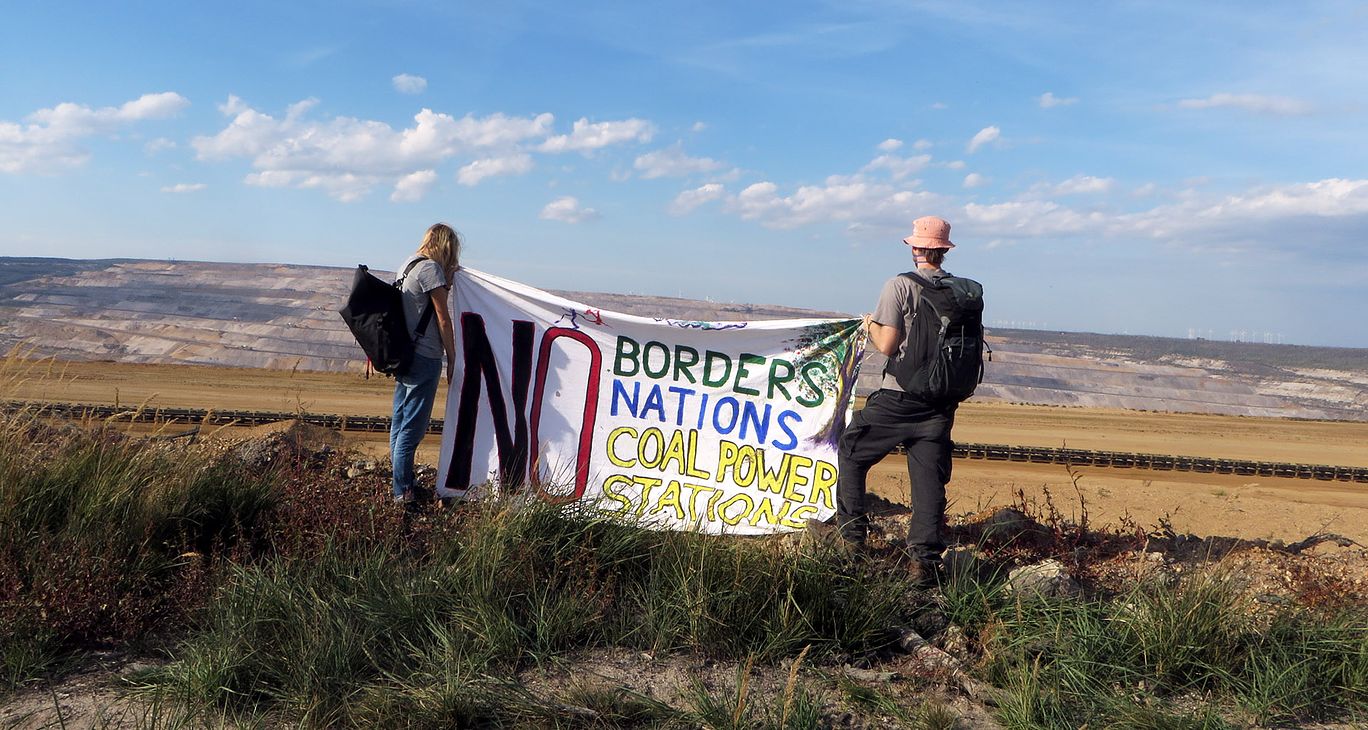
The policewomen and policemen... they fulfill their duty in the name of the state <b>In Our Name</b>. This is how North Rhine-Westphalia Interior Minister Herbert Reul sees it. The conflict he is addressing is the occupation or eviction of the Hambach Forest. But obviously not everyone sees it this way. While the corporation, with the support of politics, tries to create a fait accompli, a broader resistance is forming on the other side. The initial 50 forest occupiers are joined by more and more supporters, resulting in 50,000 people demonstrating in the forest. Self-proclaimed "forest protectors" have been occupying a piece of forest for over five years, which the energy corporation RWE wants to clear in order to mine the underlying lignite. The forest protectors are mostly young people who see their chances of survival in the future threatened by climate change. In the Hambach Forest, they stand in front of the employees and security services of the energy corporation with their bodies to protect "millions of living beings" from them. The <b>corporation</b> and its employees, on the other hand, see themselves as in the right, as they are only acting within official permits and are creating the basis for industrial society with their work. Accordingly, their activities are secured by the police. They want to continue working until 2045 - as planned 40 years ago - but due to the coal compromise, they are now supposed to be satisfied with a lifespan until 2038. According to the <b>BUND</b>, the corporation's actions are not entirely correct: the forest should have been reported for the European "Fauna, Flora, Habitat" program, which would fundamentally prevent deforestation. Therefore, the BUND has sued the state of North Rhine-Westphalia and the corporation. The forest and nature protectors who have traveled there are initially disappointed by the court. Another, constantly changing group - concerned or interested citizens from near and far, mixed with local citizen initiatives - initially meets once a month, later weekly for <b>forest walks</b>. With the escalation of the conflict, this group grows from a few hundred to thousands and soon tens of thousands. They create a public presence that impresses the press, politics, and ultimately the Higher Administrative Court in the distant city of Münster. "<b>Ende Gelände</b>", a nationwide alliance of local environmental initiatives, joins in at irregular intervals and tries to block the production of electricity from lignite through various acts of civil disobedience (non-violent). Their function is to draw national attention to the conflict. This prompts the <b>unions</b> to take action, who label "Ende Gelände" as "violence-prone autonomists" and try to exclude them, just like the forest protectors as eco-terrorists. While many individual union members are on the side of the opponents of lignite, the IG BCE and ver.di are active on the side of the corporation. They suggest shifting the public discussion to the supervisory boards. <b>In Our Name</b> raises the question of democracy in our parliamentary system: since the conflict is largely fought through images, the film tries to understand how the images are created and how they are then used.
Mood
Cast & Crew
Cinematic Technique
Pace
Style
Time-Period
Central Conflict
Characters
Ending
Historical Context
Key Plot Points
Plot
Setting
Shooting Location
Theme
Genre
Audiences
Titles
Production Countries
Release Year